

The Problem
Most CAR constructs use a 3x(G4S) linker – a simple, flexible connector with the sequence GGGGSGGGGSGGGGS – to join the variable domains of the scFV . It’s a standard in the field because it’s well-tolerated by the immune system and provides the right amount of flexibility between functional domains. But detecting this linker reliably has remained surprisingly difficult due to lack of proper antibody.
The problem: existing commercial 3xG4S antibodies have three critical limitations that make them unsuitable for rigorous manufacturing QC:
- Inconsistent binding across CAR formats. Most antibodies show variable binding depending on whether the CAR uses a VL-VH orientation versus VH-VL, and whether it’s based on VHH domains or traditional scFv constructs. This orientation-dependence means researchers can’t compare data across different CAR designs, and it introduces variability into flow cytometry measurements that should be standardized.
- High cross-reactivity with related sequences. antibodies recognize not only 3xG4S but also bind to similar linker sequences like the Whitlow linker (a different flexible connector). This cross-reactivity means you can’t be confident that the signal you’re measuring actually comes from your target CAR – it could be binding to unintended sequences.
- Weak polyclonal titers. Because 3xG4S has extremely low antigenicity (by design, since it’s in a therapeutic protein), achieving high titers through conventional immunization is difficult. This translates to weak signals in ELISA and flow cytometry, which limits detection sensitivity and creates bottlenecks in manufacturing workflows.
The impact: researchers are left unable to reliably quantify CAR expression, which is essential for process development, cell sorting optimization, and ensuring batch consistency.
The Solution
Exonbio approached this using SPIN® technology combined with a targeted counter-selection strategy during antibody development. Rather than accepting whatever antibodies the immune system produced, the team implemented a precision selection workflow:
First, rabbits were immunized with 3xG4S conjugated to a carrier protein to generate a diverse antibody response. Then, using SPIN®’s single plasma cell isolation capability, individual antibody-producing cells were screened. The key was counter-selection: monoclonal candidates were evaluated not just for binding to 3xG4S, but also for their lack of binding to off-target linker sequences. This eliminated cross-reactive clones early, enriching for truly specific binders.
Additionally, Exonbio screened for clones that recognized 3xG4S equally well in both orientations (VL-VH and VH-VL), as well as screened to exclude clones that recognized the Whitlow linker, ensuring the final antibody would work reliably across different CAR designs used in the field.
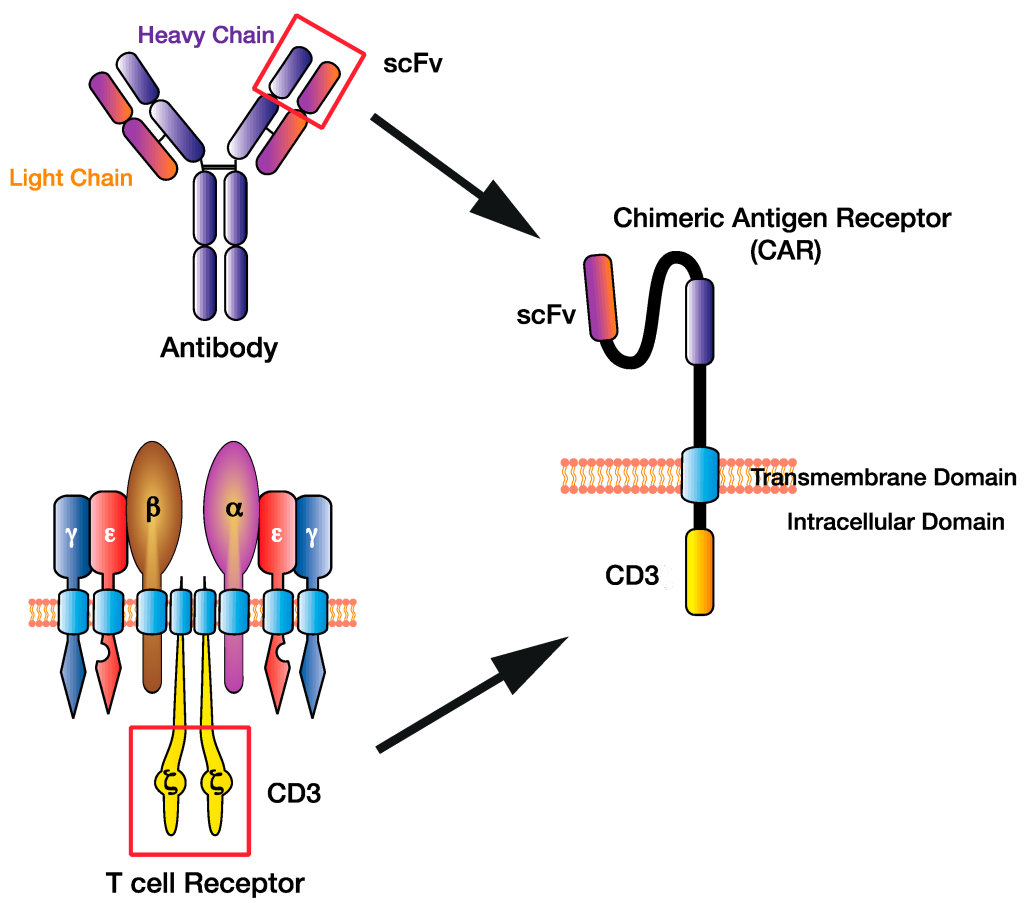
Figue1: A chimeric antigen receptor (CAR) is engineered by fusing the targeting fragment (scFv) from an antibody with the signaling domain (CD3) from a T cell receptor.
The Results
Superior specificity: Monoclonal clones demonstrate strong, selective binding to 3xG4S while effectively rejecting off-target linkers like and Whitlow. This high selectivity ensures that researchers can confidently measure CAR expression without interference from cross-reactive sequences.
Consistent binding across CAR orientations: Lead clones bind equally well to both VL-3xG4S-VH and VH-3xG4S-VL formats. Multiple independent monoclonal clones achieve consistent binding regardless of CAR orientation – a critical advantage that addresses a major limitation of existing commercial antibodies.
Functional FACS-ready titers:. This represents a substantial improvement over the weak affinity typically observed with low-immunogenicity targets, meaning researchers can get clear, reliable signal.
Why This Matters
- Reliably measure transduction efficiency during process development with confidence that the signal comes from their target CAR, not cross-reactive sequences.
- Ensure batch consistency through reliable release testing, which is essential for bringing cell therapies to the clinic and maintaining quality across patient doses.
- Reduce assay complexity by using a single, well-characterized antibody instead of multiple reagents that may have different performance characteristics
For any researcher or organization developing therapeutic antibodies – whether for CAR-T detection, IHC, flow cytometry, or other applications – Exonbio’s SPIN® technology delivers the specificity and functional performance that conventional approaches simply cannot match. These monoclonals represent what’s possible when precision antibody development meets the detection challenges of cell therapy manufacturing.
Need a high-quality antibody for your cell therapy research? Contact Exonbio at info@exonbio.com to discuss your project.